Digital Pacific Company Blog

Useful tips on web design, hosting, marketing and more…

Posts Tagged ‘offline business’

Three Basic Lessons Business Owners Can Learn from the Movie The Social Network

Friday, November 5th, 2010

Three Basic Lessons Business Owners Can Learn from the Movie The Social Network

So the dramatic success of the world’s youngest billionaire Mark Zuckerberg has finally been captured on film. Viewers from all around the globe are now able to discover how the phenomenon of Facebook all started, and what was happening as it took the world by storm.

With rave reviews spanning from the New York Times to Time Magazine to Rolling Stone, there is something in this movie for everyone. But if you’re running a business (or just starting to set one up), take a closer look — there are some very basic but valuable lessons in this film that every budding entrepreneur should be careful to take note of and learn.
 

Lesson #1: You Don’t Have to Have an Original Idea to Be a Success

When Cameron and Tyler Winklevoss approach Mark Zuckererg and brief him on their brilliant idea for “Harvard Connection”, Mark blankly looks at them and says, “How is that any different to Myspace or Friendster?”

Zuckerberg had a point. Before Facebook was created in 2004, social networking sites already existed. Friendster had been established in 2002, and Myspace had been established in 2003. The question Zuckerberg posed to the twins was: why would anyone bother to create and use another personal profile when Harvard Connection planned to do exactly the same thing?

But when Facebook launched, it boomed in a big way. Why? The difference was exclusivity. Although Zuckerberg used the same concept as Friendster and Myspace to create another online social networking platform, his idea (or some would argue, the Winklevoss’ idea) of slightly tweaking the content just worked. He added different features that Friendster and Myspace did not offer, and the resulting product was something completely unique.

This story is just one example of how an idea does not have to be unusual to be a big hit. There are millions of people constantly thinking of exactly the same ways to create and promote their business, but some work out to be more successful than others. They do this by figuring out original ways to build on unoriginal concepts. Just be careful not to get sued for $65 million in the process!

For a fun example, check out this interesting article showcasing the Top 20 Copycat Ads from Mumbrella, where sometimes the copycat ads win a bigger audience than those who came up with the idea in the first place.

Lesson #2: Be Prepared to Expand

So you’ve made it big. People are catching on and you’re attracting a lot of attention. Now is not the time to screw things up.

The number of Facebook accounts that were activated exploded within two years, originating from only Harvard students to anyone in the world with a valid email address in 2006. The amount of work required to maintain the site became mammoth; additional staff was recruited and more server space was continually added to keep the site successfully running 24 hours a day.

For anyone running an online or ‘bricks and mortar’ type business, it is important to keep on top of demand so you can capitalise on your newfound success. If you’re not a business that requires you to upgrade your servers, this could mean that you need to make sure you have plenty of product in stock. Most of all, encourage customer to stay interested in your business by making sure that service is always on hand and help is readily available. If you attract a sudden increase in customers but don’t have the resources to provide them with what they want, you risk prematurely ruining your business’ reputation.

(Furthermore, if you think your business will continue to expand, stay committed and don’t sell yourself short. Facebook is currently valued at $25 billion. If Zuckerberg had sold Facebook as soon as it had taken off, he would not be where he is today!)

Lesson #3: Best Friends Don’t Always Make the Best Team

When a business is in its infancy, there is usually only one person or a couple of business owners who run the entire show.

In The Social Network, Zuckerberg may have spearheaded Facebook but he called upon his best friend Eduardo Saverin to be his business partner to help him get the project off the ground. However, as the film develops, we see cracks appear between the two, each with different ideas of how the business should operate. In a bitter end, the best friends go their separate ways.

When creating a team to effectively run a business, many people would not hesitate to say that each member must bring something different to the table. While this is true, be careful; each team member must agree on the direction of the business. The staff behind your business has to want the same things and aspire to reach the same vision as you. If your team has different opinions on how the business should operate, be prepared to work together, brainstorm and acknowledge different ideas. If you and your best friend/business partner cannot reach a compromise, it’s time to split.

As seen in The Social Network (and more often than not, in everyday life), sometimes having friends work with you on a professional level just doesn’t work. Don’t risk jeopardising the integrity your business and the close relationships you have with your friends. After all, unlike Mark Zuckerberg, we all need to have good friends, not just the type of Facebook or Myspace friends that you find online.

Three Basic Lessons Business Owners Can Learn from the Movie The Social Network

Three Basic Lessons Business Owners Can Learn from the Movie The Social Network Three Basic Lessons Business Owners Can Learn from the Movie The Social Network Three Basic Lessons Business Owners Can Learn from the Movie The Social Network Three Basic Lessons Business Owners Can Learn from the Movie The Social Network Three Basic Lessons Business Owners Can Learn from the Movie The Social Network Three Basic Lessons Business Owners Can Learn from the Movie The Social Network Three Basic Lessons Business Owners Can Learn from the Movie The Social Network Three Basic Lessons Business Owners Can Learn from the Movie The Social Network Three Basic Lessons Business Owners Can Learn from the Movie The Social Network

Online Business vs Offline Business

Monday, May 17th, 2010

At the end of 2009, the number of Internet subscribers in Australia reached 9.1 million, getting close to nearly half of the entire population. That fact provided by the Australia Bureau of Statistics only accounts for subscribers, and not for the number of Internet users in total, which was also said in 2009 to reach the 17 million mark.

With statistics like these, there is really no reason why you should not be getting your business online today. The position of the Internet in today’s lifestyle makes it virtually impossible to not see benefits by initiating the change, and doing so has never been quite so affordable. Plus, advancements in Web-related software programs leave you with no excuse because building a website can be considered so easy a child could do it.

Need more convincing?

Let’s investigate the benefits of operating a business online as opposed to offline.

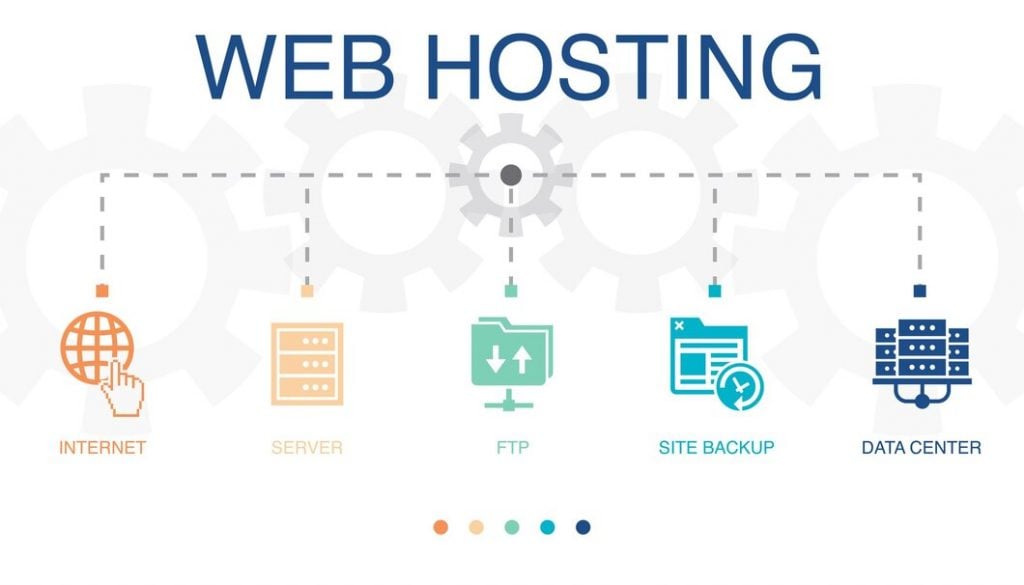
Rent – The only rent you will pay to get online is for hosting space on a web server. Basically, web hosting is the portion of a server that will store the virtual files, images and documents that make up your website, in addition to your emails. Web hosting can be as little as just a few dollars a month depending on how much space you need.

>> Read more about our Business Web Hosting Packages

Staff – The amount of staff needed to run the website or online shopping cart can seriously be a single person. Most of the time, a website may answer any questions a web customer may have, meaning there is no need to call or operate face-to-face. If you run an ecommerce shop, taking money and sending invoices can be done through the shop automatically, meaning you only have to package up and ship out whatever has been sold.

>> Read more about the Digital Pacific Shopping Cart

Automation – Putting a business online offers a certain level of automation, meaning you can spend your time where the business needs it most. As stated above, a website can direct users to answers for their questions and order products without ever needing to take away from any employee’s time.

24 Hours – Websites never sleep! When you or your employees from an offline business take off to head home, the online business is still working, and still possibly making you money.

New Markets – The Internet is a tool that most anyone can use, and even in the most remote locations. By putting your business online, you might be gaining access to new markets that you weren’t able to otherwise.

Both product and service businesses gain.

Don’t think that you need to sell a physical product to put your business online. Even service-focused businesses can benefit by having a website.

Consider this: Where do you look when you need to find a plumber in Sydney… the phone book? Most people nowadays simply pull up a Google search box and type in “Sydney plumber” to find what they are looking for. Sure, getting a phone number listed doesn’t necessarily mean that you need a website, but those with one that potential customers can view just might have the better shot at getting that business. Having a website in today’s world means that you simply come off as more professional and put together, and when customers are given the option, they will most likely choose whichever appears the best.

An online presence can back up the word of mouth mentions.

If anything, a website alone can display to potential customers examples of your work. If you fix up cars, you can put up the before and after pictures. If you run a photography studio, you can let people view your style. The Internet makes it so easy for someone to make a decision right then and there as to whether or not they want to go with your business. Just imagine a friend going on about the portraits they had taken at a specific studio. They just might throw in that the studio has a website, so before taking their word you might pop on to have a look of your own.

What to do now.

If you’re thinking that you might want to get your business online, it is a good idea to map out a plan. Sure, the Web can bring you some attention, but it doesn’t just happen without a little bit of forethought. Here are some ideas to keep in mind when choosing your online method:

  • Who is your target market? Finding your target market will help you design your site, include the right key words and advertise in the right areas on the Web.
  • What do you hope to accomplish with the online presence? Do you want to sell products online, sign people up for newsletters, display previous work or build a community? Each goal has it’s own type of website. Perhaps you decide that sharing company insights is your draw, and that can be done through a business blog.
  • How much time and effort are you willing to put in? Website creation solutions run from easy to hard, so it is up to you, the owner, the amount of work and/or money you invest.

If you’ve made it through all of this information, then you are probably ready to get your business online. All the tools and information to do so can be found in this article, but if you still have questions you can easily phone our sales team at 1300MYHOST. They are always happy to help guide you in the proper direction.

Online Business vs Offline Business Online Business vs Offline Business Online Business vs Offline Business Online Business vs Offline Business Online Business vs Offline Business Online Business vs Offline Business Online Business vs Offline Business Online Business vs Offline Business Online Business vs Offline Business